

No More Blue Skies: Rural India's Pollution & Climate Battle
Our conversations with rural citizens from different ecological regions of the country confirmed our worst fear

Adrija Chaudhuri
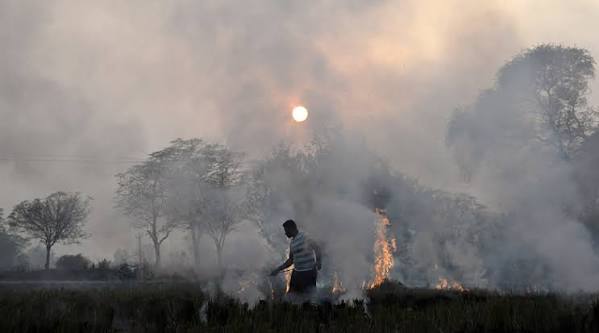
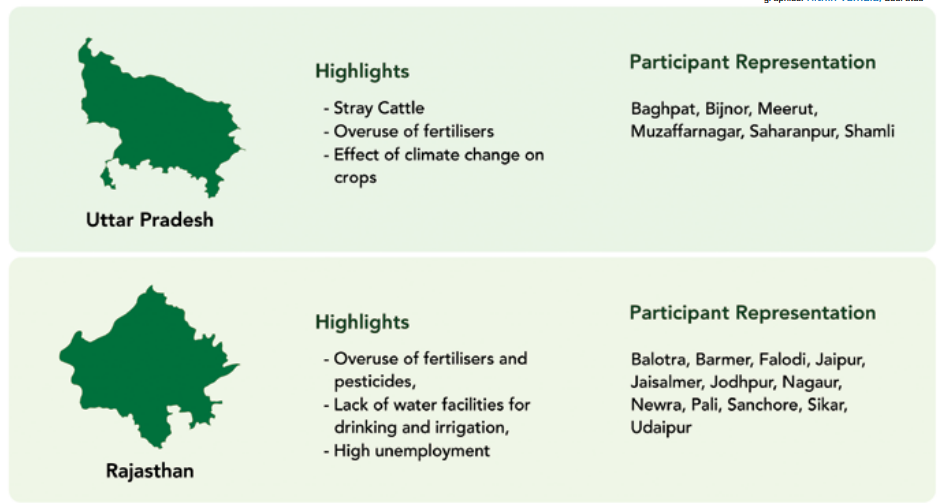
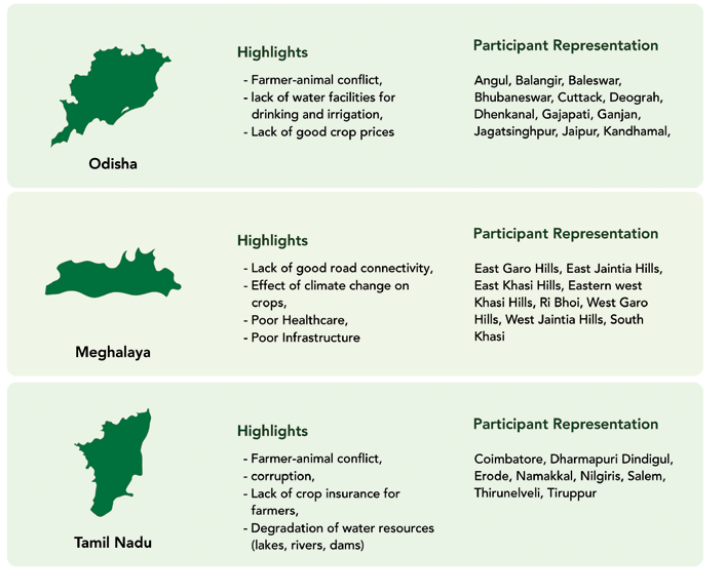
ur conversations with rural citizens from different ecological regions of the country confirmed our worst fear: that climate change is already here and rural communities are at the frontiers of it. As most of our participants were involved in agriculture and allied sectors, they spoke extensively of the damage caused to crops by climate change. In UP, farmers told us how unusually high summer temperatures had affected the mango and sugarcane crops. Unseasonal rainfall in March had also flattened much of the ripening wheat crop. In Rajasthan, where crops were dependent on rainfall in many regions, farmers could not effectively plan their crops due to the increasingly irregular rains. In Odisha, participants watched with dismay as unusually heavy rainfall lashed their crops and washed away the topsoil, causing soil erosion. The lack of timely rains was also an issue. As a tenant farmer and labour migrant from Balangir district told us: “Jehetu sei borsho barsa helani, tarporo jeto dhano thila shobu noshto hoye gela [It was my bad luck that that very year (where he leased land for farming) it did not rain and my rice crop got destroyed].” Coastal communities in Odisha were also affected by the rise in sea levels caused by global warming. Farmers in Meghalaya were also affected by heavy rainfall causing soil erosion, despite their best efforts to practice terrace farming, bunding and planting border crops. They believed human actions such as limestone quarrying and deforestation had worsened this problem. And then there were the pests. The irregular rains and erratic weather were causing pest infestations at unpredictable times. In UP and Rajasthan, crops like mango, wheat moong and sugarcane were being affected by pests at odd times of the year. In Meghalaya particularly, women farmers were aggrieved by the wide variety of pests that were affecting their maize, vegetable and fruit crops. Many participants saw natural farming as a solution to this crisis, and hoped that the government would take a more proactive role in promoting sustainable agriculture. They also felt effective crop insurance would help reduce the risk that they bore in the era of climate change.
Interacting with our participants also disproved the common misconception that environmental pollution was primarily an urban problem. In Muzaffarnagar, rural citizens complained of industrial pollution of water bodies, from the sugar mills nearby. This along with chemical residues on food was believed to be causing increased incidence of cancer and heart attacks in rural areas. There was a general perception that the overall quality of life in rural areas had declined due to pollution of air, water and land. As a resident of Muzaffarnagar put it: “People’s lives are valuable, even if we get good yields and good prices for our crops, will we end up dying after eating them?” This was echoed in Jodhpur, where our participants linked the rising cases of cancer in rural areas to the overuse of chemicals in agriculture. Rural citizens in Tamil Nadu told us how industries were dumping waste in water bodies and groundwater was being contaminated through leaching, leading to more diseases in rural areas.
Our participants were not just aware of environmental issues, they also knew exactly what they wanted to hear from electoral candidates in terms of action to be taken. In Coimbatore, they called for a more effective pollution control board, rainwater harvesting and water conservation plants, and the creation of ‘food forests’ in every village. In Bhubaneswar, they felt raising awareness, reducing plastic waste and promoting solar energy were most important. In Muzaffarnagar, they proposed planting trees on panchayat land and conserving village lakes, forests and commons. Rural citizens everywhere were as aware and wellinformed as their urban counterparts. As their everyday lives were far more dependent on the environment, they felt the impacts of environmental pollution and climate change more keenly. With minimal support, they were willing to implement measures to protect and conserve their surroundings.
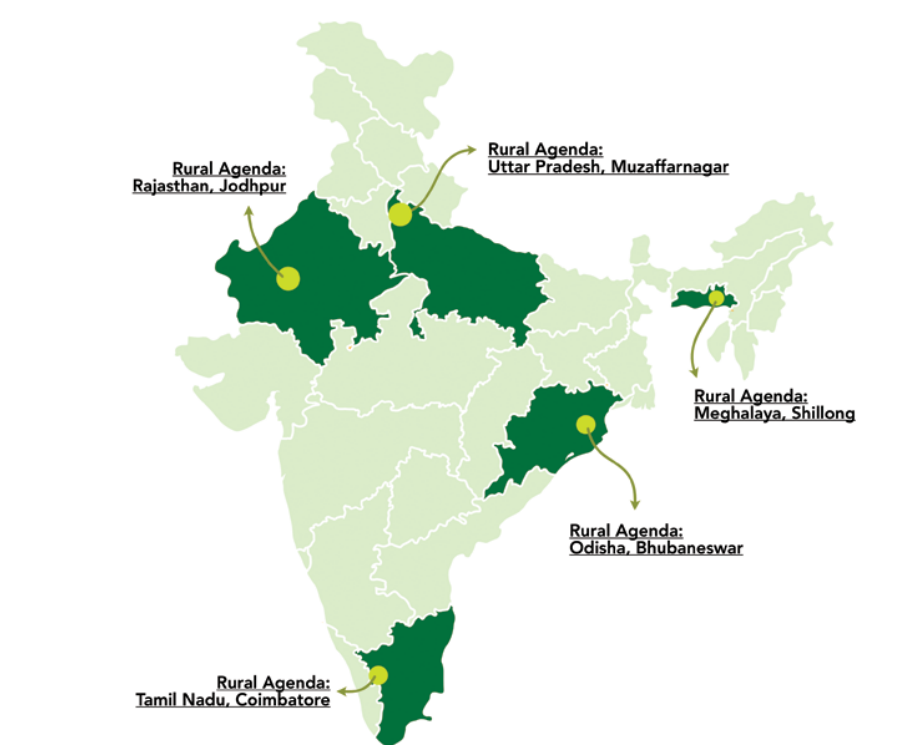
national imagination apart from stories surrounding farmer suicides, adulterated alcohol or debates on the mid-day meal scheme. In a country where more than half of its population is rooted in rural areas, this is an incredible mismatch in representation. The second reason pertains to the dramatic changes that have happened in the last 15 years across the rural landscape with the penetration of the internet and better infrastructure. Through these convenings, Socratus and Rural Voice aimed to capture the current state of mind of rural India as well as generate a conversation around the issues raised. This article aims to honestly reflect the views and feelings of the people we talked to about their lives, problems, hopes, and dreams for a brighter future. Our work covers people from 5 states of India, in an attempt to represent the diversity in the 5 regions: the north, south, east, west and north-east. We bring particular attention to our work in the north-east. Given its sparse population, distinct cultural diversity and remoteness, it is often excluded in national dialogues. However, keep in mind that India is vast and diverse, so we couldn't include every region or person's perspective. We picked five states from each region of India, and in each state we partnered with a local organization that helped us bring the diverse rural citizens together to ensure a wide representation of the local population. We tried to recreate the same setting in all five states while being sensitive to the needs of the participants in each location.
We had our convenings in 5 locations. At each location, we had a convening with people from 10–11 nearby districts. These locations were Bhubaneswar (Odisha), Coimbatore (Tamil Nadu), Jodhpur (Rajasthan), Muzaffarnagar (Uttar Pradesh) and Shillong (Meghalaya). These states are culturally, economically, agro-climatically, and politically different. Our local partners were Livelihood Alternatives in Odisha; TNFPA (Tamil Nadu Farmers Protection Association) and FMIF (Farmers Merchants Industrialists Federation) in Tamil Nadu; South Asia Biotechnology Centre in Rajasthan; farmer leaders Umesh Panwar, Narendra Pal Verma and Dharmendra Malik in Uttar Pradesh; and NESFAS (North East Society For Agroecology Support) in Meghalaya. With their help, we were able to bring together more than 300 participants from 60 districts.
RNI No: DELBIL/2024/86754 Email: [email protected]