

Clouds of Concern: Monsoon Faces El Niño Threat
A weak monsoon driven by El Niño could impact crop production, food security, and economic growth

Ajeet Singh
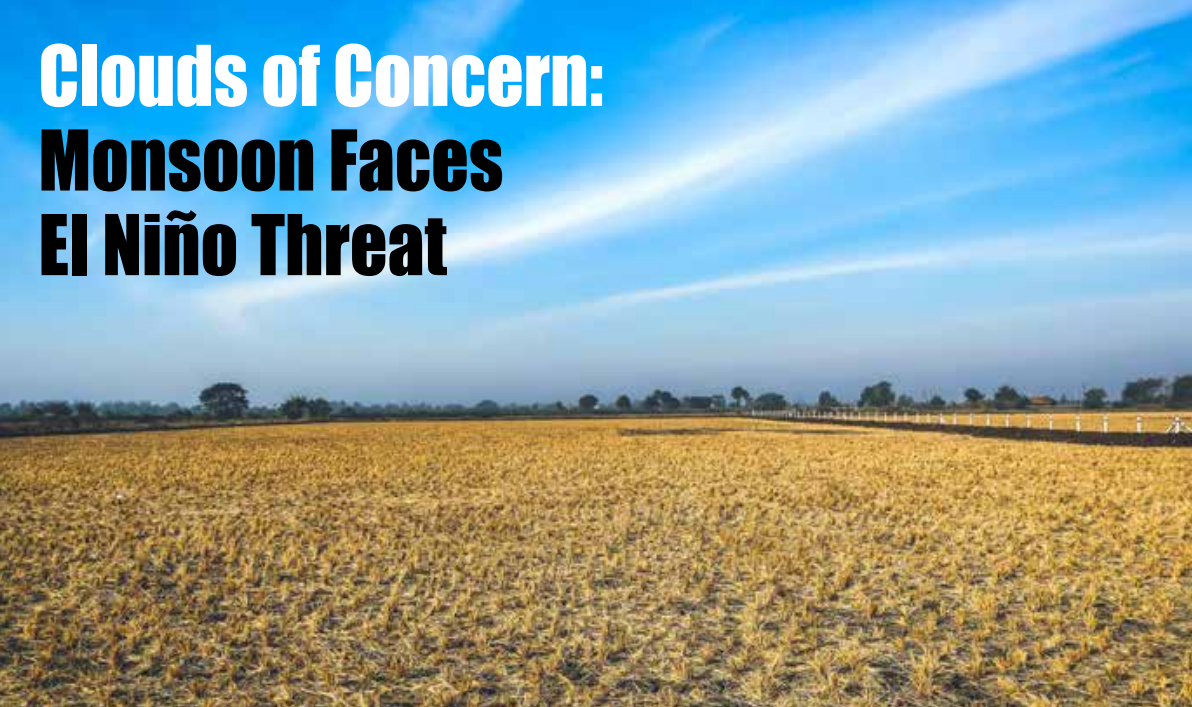
India may witness its weakest monsoon in 11 years in 2026 as the developing El Niño phenomenon is expected to suppress rainfall during the June-September southwest monsoon season, raising concerns over agricultural production, food security, inflation, and overall economic growth.
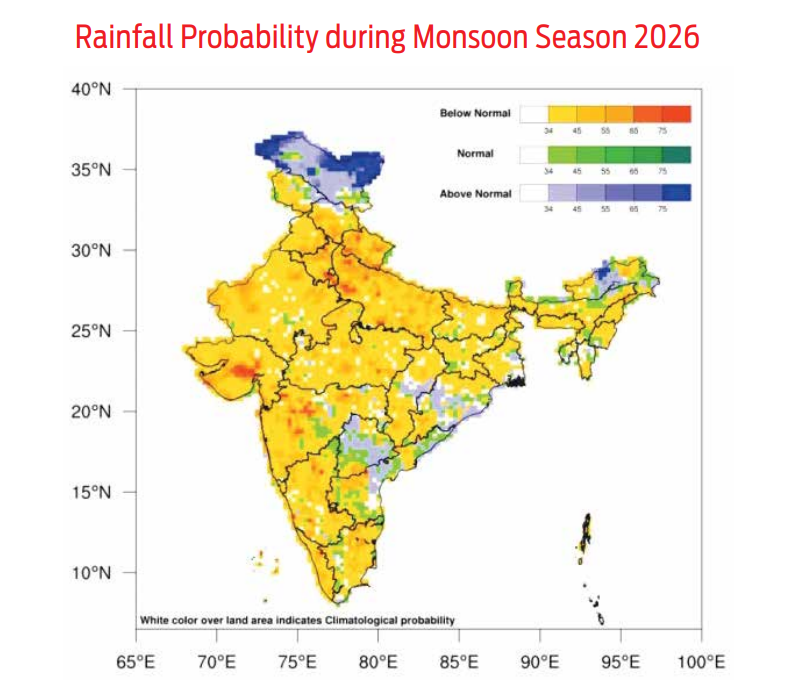
The India Meteorological Department (IMD), in its forecast issued on May 29, projected monsoon rainfall at 90 percent of the Long Period Average (LPA) during the 2026 season. If realized, this would make it the driest monsoon since 2015.
The warning comes at a time when water availability is already under pressure. According to the Central Water Commission (CWC), storage in the country’s 166 major reservoirs fell below 30 percent of total capacity in the first week of June. Reservoir levels were lower than last year due to the southwest monsoon arriving three days behind schedule, although they remained above the average level recorded over the past decade.
El Niño Developing Rapidly
The World Meteorological Organization (WMO) has warned that El Niño conditions are developing rapidly in the tropical Pacific Ocean and could significantly influence global weather patterns in the coming months. The phenomenon is expected to increase the likelihood of heatwaves, droughts, floods, and other extreme weather events across different parts of the world.
Forecasts suggest that El Niño conditions will begin influencing weather patterns during the early months of the monsoon season and may strengthen further, potentially reaching a strong phase by November. Ocean temperature observations up to May indicate unusually warm sea surface temperatures in the central and eastern equatorial Pacific, creating favourable conditions for the development of El Niño.
What is El Niño?
El Niño is a naturally occurring climate phenomenon characterised by above-normal warming of sea surface temperatures in the central and eastern Pacific Ocean. The warming alters global atmospheric circulation patterns and affects rainfall and temperature across many regions, including India.
Typically, El Niño brings above-normal rainfall and flooding to parts of South America, Eastern Africa, and the Southern United States, while causing reduced monsoon rainfall, drought, and higher temperatures in South Asia, Indonesia, and Australia.
El Niño is officially declared when sea surface temperatures in the equatorial Pacific rise at least 0.5 degrees Celsius above normal. A strong El Niño event is generally associated with temperature anomalies of 1.5 to 2 degrees Celsius or higher.
Current forecasts indicate an 80 percent probability of El Niño developing between June and August, with a more than 90 percent chance of persisting through November. Most regions of the world are expected to experience above-normal temperatures during the June-August period.
Risks for Agriculture
India’s economy remains heavily dependent on the monsoon, which accounts for nearly 70 percent of the country’s annual rainfall. Monsoon rains are critical for agriculture, groundwater recharge, and reservoir replenishment. Nearly half of India’s agricultural land depends primarily on rainfall for irrigation.
Below-normal rainfall could adversely affect sowing and production of kharif crops. At a time when fertilizer and fuel prices are facing upward pressure due to ongoing tensions in West Asia, a weak monsoon could place additional stress on the farm sector, potentially pushing up food inflation and slowing economic growth.
Kharif agriculture is largely dependent on monsoon rainfall. Crops such as rice, maize, soybean, cotton, millet, pulses, and oilseeds are sown between June and August. Delayed or inadequate rainfall may force farmers to postpone sowing operations and could reduce crop yields.
Impact on Economy
Taking into account the risks posed by El Niño and global uncertainties, the Reserve Bank of India (RBI) has revised its retail inflation forecast for FY 2026-27 upward from 4.6 percent to 5.1 percent. At the same time, it has lowered its GDP growth projection from 6.9 percent to 6.6 percent.
In its review, RBI cautioned that Indian agriculture faces the risk of damage from a weaker monsoon linked to El Niño. However, it noted that expanded irrigation coverage, improved crop management practices, and technological advancements could help mitigate potential losses.
The Ministry of Agriculture has also marginally reduced the foodgrain production target for 2026-27 to 373.9 million tonnes, compared with an estimated record output of 376.6 million tonnes in 2025-26. Production targets for rice and maize have been lowered slightly in view of the forecast for below-normal rainfall.
Government Gets Ready
With concerns over a weak monsoon growing, the government has initiated preparations to deal with potential rainfall deficits. Speaking at the national Kharif Conference, Union Agriculture and Farmers’ Welfare Minister Shivraj Singh Chouhan said there was no need to panic over El Niño, adding that the government would respond according to the specific needs of each state and prevailing conditions. Directions have been issued to implement contingency plans in vulnerable districts.
The minister said that quality seeds, exceeding projected requirements by nearly 11 percent, have been made available to farmers. In addition, a National Seed Reserve of 174,000 quintals has been created to ensure timely support. He also emphasised integrated farming and greater self-reliance in pulses and oilseeds production.
Government data show that wheat and rice stocks in the central pool rose to 81.75 million tonnes as of April 1, nearly three times the required buffer norm of 21.04 million tonnes. Alongside a record buffer stock of 4.3 million tonnes of pulses, these reserves are expected to strengthen the country’s ability to manage potential disruptions arising from El Niño-related weather risks. As India enters a potentially challenging monsoon season, policymakers, farmers, and markets will closely monitor rainfall patterns, with the performance of the monsoon likely to play a decisive role in determining agricultural output, food prices, and economic growth in the months ahead.
RNI No: DELBIL/2024/86754 Email: [email protected]