
Lab-to-Land Drive to Transform Indian Agriculture: Shivraj Singh Chouhan
Union Minister for Agriculture and Farmers' Welfare and Rural Development, Shivraj Singh Chouhan, has been continuously engaging with farmers in the field. To this end, an unprecedented initiative like the 'Viksit Krishi Sankalp Abhiyan' has been launched. He has taken a strong stand against the sale of spurious and sub-standard fertilizers, seeds, and pesticides. Efforts are also being made to solve the fundamental challenges of farming. Harvir Singh, Editor-in-Chief of Rural World, had an exclusive conversation with Union Minister Shivraj Singh Chouhan on various issues related to agriculture and farmers.
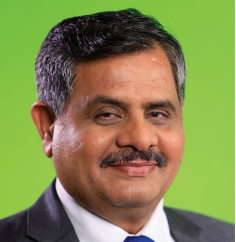
Harvir Singh

Q Under the 'Viksit Krishi Sankalp Abhiyan,' you visited farmers across the country. What was your experience, and what is the way forward?
Under the vision and leadership of Prime Minister Narendra Modi, incredible work has been done in the agriculture sector in recent years. Foodgrain production has increased astonishingly, and the country's granaries are full. However, there are still some challenges. We need to increase the production of pulses, oilseeds, and cotton. We must take strong steps towards natural farming. Along with increasing production, it is equally important to reduce costs to make farming profitable. Therefore, we have decided to bring scientific research from the lab to the land.
Through the 'Viksit Krishi Sankalp Abhiyan,' we sent scientists to farmers and connected the lab to the land. This is a historic initiative. More than 2,100 teams of scientists reached villages across the country and had direct conversations with over 1.35 crore farmers. Inspired by the Prime Minister's 'Lab to Land' vision, these teams reached more than 60,000 villages.
This campaign has identified 500 subjects that require research today. Scientists will now conduct research in labs based on the problems faced by farmers. Farmers have also made 300 innovations, which will be given a scientific transformation. The objective of this campaign is very useful and comprehensive. The information gathered from it will change the lives of farmers and fill the country's stores with foodgrains, fruits, and vegetables.
During the campaign, we learned many important things that are now paving the way forward. This campaign will not stop. We will continue to visit farmers and strive to make farming advanced and farmers prosperous. The important thing is that the direction of agricultural research will now be determined by the needs of the farmers Scientists have been instructed to conduct research according to the current needs of farming. Additionally, crop-wise and region-wise conferences are being organized.
Q What are the preparations for the 'Viksit Krishi Sankalp Abhiyan' for the Rabi season?
For the Rabi crop, the 'Viksit Krishi Sankalp Abhiyan' will also send teams of scientists to villages to provide farmers with accurate information about farming and research. The dialogue with farmers will continue without interruption.
The Prime Minister has said that the government should be visible in people's lives, not just in files. We are again going to the ground for this. The two-day conference for the Rabi season 'Viksit Krishi Sankalp Abhiyan' will be held in New Delhi on September 15 and 16, and the campaign will officially begin on October 3, 2025, with 'Vijay Parv.' The campaign will run from October 3 to October 18, which is Dhanteras. We will also formally write to the Chief Ministers of the states, asking them to ensure that their Agriculture Ministers and senior officials from the Agriculture Department attend this conference.
During the campaign, we will try to educate farmers about new seeds, new farming practices, new systems of mechanization, and crops suitable for the climate. They will also be guided on crop varieties to grow based on the nutrients in their soil. Our thousands of scientists, agriculture department employees and officials, progressive farmers, and the Agriculture Ministers themselves will go back to the farmers to adopt better techniques for the Rabi crop. This government will no longer be run from Krishi Bhawan. It will be run from the fields, from the threshing floors, and by talking to the farmers.
Q Spurious and sub-standard fertilizers, seeds, and pesticides are a big issue. How will this be curbed?
The government is taking strict measures to protect farmers from spurious and sub-standard fertilizers and pesticides. Licenses of companies whose products have damaged crops are being revoked, and strict action will be taken against the culprits. We will not tolerate farmers being cheated in the name of fake fertilizers, seeds, and pesticides. We will not spare those who deceive farmers and will run a campaign against them throughout the country.
The government will soon introduce a new law to take strict action against those who manufacture spurious and sub-standard fertilizers. In collaboration with the states, we will strengthen our system to ensure the strictest action against those selling such products. If something wrong is happening anywhere, it is our duty to take strict action in the interest of the farmers. State governments have been asked to take strict action in this regard. Efforts are also being made to spread awareness among farmers.
The process of creating a strict law to curb spurious and sub-standard fertilizers, seeds, and pesticides is underway. Soon, a solid law will be enacted to take action against such people and send the culprits to jail.
Q There were complaints in Madhya Pradesh about soybean crops being damaged by a poor-quality herbicide. What action has been taken?
In Madhya Pradesh, we received complaints from Vidisha, Dewas, and Dhar about soybean crops being damaged by herbicide. I personally visited the farmers' fields to assess the damage and instructed officials to investigate and take strict action.
The investigation found that 6 out of 20 samples were substandard. FIRs were registered against the defaulting company, HPM Chemicals & Fertilizers Ltd., in three districts. The licenses of 9 dealers in Vidisha and Dewas districts were revoked, and the company's warehouse license in Dewas was also cancelled. On the recommendation of the Ministry of Agriculture, the licensing authority in Rajasthan also suspended the manufacturing license of the said company.
Q You have also taken a strong stance on bio-stimulants. What steps have been taken?
In the name of bio-stimulants, 30,000 products were being sold. Farmers had no idea if these were beneficial or not, or what their quality was. Sometimes, farmers were told to buy two bottles of bio-stimulants if they wanted one or two sacks of DAP.
Now, it will be ensured that only certified bio-stimulants reach farmers. If someone forcibly sells another product along with fertilizer, that is also wrong and will lead to strict action. The states have also been asked to take strong steps in this regard.
In the larger interest of farmers, it has been decided not to extend the registration of bio-stimulants after June 16, 2025. All provisional registrations became invalid from June 17, 2025. Now, only 146 biostimulant products have been notified in Schedule-VI FCO, 1985, and the remaining manufacturers/ importers must fully comply with quality standards. Otherwise, no bio-stimulant products will be sold. All information and notifications in this regard have been made available with full transparency in the "Biostimulants" section on the website of the Department of Agriculture.
We will not allow the sale of anything that does not benefit farmers. Until ICAR institutes or agricultural universities prove through three tests that a product provides a real benefit to farmers, the sale of such products will not be allowed. A provision has been made to prevent the sale of any bio-stimulant without being certified by ICAR at three levels.
Q With the increased dialogue with farmers, their complaints are also coming in. How will they be addressed?
A toll-free number, 1800-180-1551, has been issued for the Kisan Call Centre to address farmers' problems. We request farmers to report substandard fertilizers, seeds, or pesticides immediately. All complaints are promptly forwarded to the concerned states and departments for action. The government is fully committed to take swift and effective action on every problem faced by farmers. Scientists, agriculture department officials, and farmers should work as a team and continuously visit fields to interact with farmers.
Q What are your main goals for the agriculture sector?
Our goal is to increase farmers' income, ensure the country's food security, and make India the world's food basket. We also aim to provide people with an adequate supply of nutritious grains, fruits, and vegetables. We want to keep the land fertile for future generations.
The Prime Minister said from the Red Fort that the government should be visible in people's lives, not just in files. We are committed to moving forward in this direction. A roadmap for the next 5 years of agriculture is being prepared in collaboration with state governments, incorporating suggestions from progressive farmers, experts, and others. We hope that through shared efforts, agriculture will move towards greater progress.
In the last 10-11 years, wheat production has increased from 86.5 million tonnes to 117.5 million tonnes, an increase of about 44 percent. This is a remarkable achievement, but we still need to work towards bringing per-hectare production on par with the global average. Increasing the productivity of pulses and oilseeds is now the need of the hour to reduce import dependence. For small and marginal farmers, integrated farming is the most profitable path, which should include animal husbandry, beekeeping, fisheries, and horticulture along with traditional farming.
Q What system is being created to address farmers' complaints?
There should be a system in place to ensure that all farmers' problems received through various channels are resolved in a timely manner. The system should be so strong that when farmer brothers and sisters contact us, they feel confident that their problems will definitely be resolved.
We are reviewing the system for handling and resolving farmers' problems received through various platforms, including the PM Kisan Portal, Kisan E-Mitra, and Kisan Call Centre. We will also talk to farmers from time to time to find out if their problems have been resolved, so that they are completely satisfied. In the event of a virus attack on crops, if farmers share information or even just a photo, a team of scientists will immediately reach the village to help.
Q How is the availability of fertilizers and the additional demand for urea being ensured?
There could be two main reasons for the additional demand for urea: first, an increase in sowing, including rice and maize, due to good rainfall; and second, the improper use of urea for nonagricultural purposes. If the demand for urea is for agricultural needs, then urea will certainly be made available, for which work is being done promptly in the ministry. However, if there is a suspicion of misuse of urea, it is a serious matter, and strict measures will be taken. State Agriculture Ministers have also been urged to ensure that urea is used correctly. Monitoring committees will be formed and the system will be strengthened in this regard.
Q What is the government's strategy to protect the interests of farmers in international trade agreements?
Placing the nation above all, the Prime Minister has made it clear that the interests of the country's farmers will not be compromised. This decision has established a strong image of India in front of the world. The interests of our farmer brothers and sisters, as well as those of livestock farmers and fishermen, will be protected. The Prime Minister has also given a call for 'Swadeshi'.
We have an agreement with the UK. Our agricultural products will now go to England without any duty. This is an equal agreement. But if someone says that the agreement should be such that their goods flood our country, then we cannot compete with them. If such an agreement were to happen, India's farmers would perish, and we would be flooded with cheap goods. The Ministry of Agriculture has forcefully stated that there will be no agreement that affects the interests of our farmers. The interests of our farmers, our livestock owners, and our fishermen will be protected. The Indian economy is growing rapidly. Our country is a large market with a population of 144 crore. 'Swadeshi' is India's true strength. The Prime Minister has called for adopting indigenous products. If we decide to buy only things made in our own state and country, millions of our people will get jobs. Their income will increase, and our economy will be strengthened.
Q What measures is the government taking to ensure farmers get a better price for their produce?
The government has increased the Minimum Support Price (MSP). It has been decided to fix the MSP by adding a 50 percent profit to the farmers' cost. So far, over `43.87 lakh crore has been deposited in farmers' accounts through the purchase of wheat and paddy. Efforts are also being made to purchase farmers' produce and ensure them better prices under the PM-AASHA and Market Intervention Scheme (MIP).
Q The Crop Insurance Scheme was started to protect farmers from the vagaries of weather. What efforts are being made to make it better and more effective?
Previous governments used to give crop insurance claims only after the entire tehsil or block's crops were destroyed, but the Prime Minister has cancelled all old schemes and created an insurance plan under which insurance claim will be given even if the crop of just one farmer in a village is destroyed.
The central government has implemented a new, easy claim settlement system in the interest of farmers. Under this, proportional payment of claims will be made based only on the central contribution, without waiting for the state's premium share. If insurance companies do not pay the claims within the stipulated time, they will have to pay the amount with 12% interest. Similarly, if state governments do not deposit their share on time, they will also have to pay 12% interest, which will go directly into the farmers' accounts.
The central government has implemented a new, easy claim settlement system in the interest of farmers. Under this, proportional payment of claims will be made based only on the central contribution, without waiting for the state's premium share. If insurance companies do not pay the claims within the stipulated time, they will have to pay the amount with 12% interest. Similarly, if state governments do not deposit their share on time, they will also have to pay 12% interest, which will go directly into the farmers' accounts.
The government is working to operate this scheme with full transparency. It is being ensured that the insurance amount reaches the farmers through digital payments. On August 11, over 3,200 crore in crop insurance claims were digitally sent directly to the bank accounts of more than 30 lakh farmers.
When a crop is destroyed by a natural disaster, not only is the crop ruined, but the farmer's life is also affected. The Pradhan Mantri Fasal Bima Yojana has proved to be a boon for farmers in such situations. The government is working to make farmers' lives happy not just through one scheme but through various schemes. Over 3.75 lakh crore has been directly transferred to farmers' accounts under the Pradhan Mantri Kisan Samman Nidhi Yojana. Since the launch of the Pradhan Mantri Fasal Bima Yojana in 2016, over 2.12 lakh crore has been given to farmers. This is a symbol of the government's farmer-friendly policy.
RNI No: DELBIL/2024/86754 Email: [email protected]