

How We Get Chickens on Our Plates
The 2.5-lakh-crore broiler industry becomes India's most successful example of contract farming
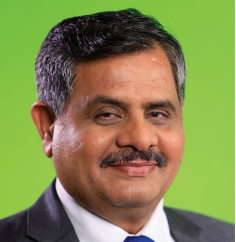
Harvir Singh

Some statistics about poultry farming and business may surprise you. Every week 14 crore chicks are placed in the organized poultry farms of the country. As a result, about 728 crore chicks are placed in farms in a year. After factoring in the mortality rates, the total weight of an average 2kg bird ready for sale in the market amounts to around 1300 crore kg annually. Based on the average retail price of Rs 200 per kg, the annual poultry business has reached more than Rs 2.5 lakh crore. With these figures, the income of farmers in poultry farming has also increased to about Rs 15,000 crore in a year. They get this in the form of Growing Charges (GC) — charges for growing the day-old chicks (DOCs) from the day they arrive at the farm to a bird weighing 2kg or more in a cycle of 40-45 days. The integrator company supplying the DOCs sells the birds to the buyers from the farm itself, from where it reaches the poultry markets across the country.
Until a few decades ago, poultry farming in the country was seen as unorganized farming done in the backyards of small and landless farmers, where chickens were raised by feeding leftover food and meagre feed. Even today, government schemes for backyard poultry for landless farmers continue as an effort to give them an additional source of income. But the way poultry farming has established itself as big contract farming and integrated business is due to a mix of technology, research, investment and market. Due to better income and less risk, a large number of farmers are getting attracted towards it, earning good profits by investing in Environmentally Controlled (EC) farms, Semi EC and Open farms. But the farmer has to do business with the help of an integrator company. The business requires not much of land but a lot of capital.
One such farmer, Milind Uttalwar, runs a broiler farm in Sukuldaihan village in Rajnandgaon district. Forty-year-old Uttalwar also owns a consumer electronics business in Rajnandgaon. He told Rural World that he has been doing poultry farming for six years. He has set up two EC sheds with a capacity of 13,000 chickens each. He has invested about Rs 60 lakh on sheds and equipment, which comes up to around Rs 450-500 per bird. These farms are operated with computer-controlled panels which regulate temperature, humidity, air, feed and water supply as per the requirement at different times from DOC till the chicken weighs two kg.
These sheds have automated feed and drinking water lines (one pen for every 30 chickens and one water nipple for 10-12 chickens), exhaust and air circulation fans, cooling pads, lighting and diesel brooders (to keep the chicks warm and provide heat in the first few days). The optimal temperature for growth of the chicks should be 32-34 degrees Celsius in the first three days, which is then gradually reduced to 26-28 degrees during 12-24 days and to 24 degrees or less after 35 days.
Milind told Rural World that he produces six batches of 26,000 chickens every year and earns up to Rs 10 lakh in each batch. The basic GC rate is Rs 10 per bird. The company also gives incentives for higher weight of broilers, better feed consumption ratio, lower mortality rate and higher price in the market.
Milind's farm has been set up by the IB Group based in Rajnandgaon. ABIS Export India Pvt. Ltd, owned by the IB Group having an annual turnover of more than Rs 11,000 crore, is one of the largest companies in the country's integrated poultry business. ABIS President Dr RK Jaiswal told Rural World that the company's founder and chairman Sultan Ali and founder and managing director Bahadur Ali started poultry business with a small farm of 200 birds and a retail shop in 1982-83. It has now become one of the leading companies of integrated poultry business in the country. Dr Jaiswal said that the company supplied to farmers on EC and Open farms DOCs as well as feed, medicine, cleaning material and provided veterinary services. It takes back broilers from farmers and sells them. This means that the farmer has to work only till the DOC is ready for sale as broiler chickens. His expenses are incurred only on running, maintaining and managing the farm. He does not have to worry about marketing the birds ready for sale. The company has connected all the farmers and the traders who buy the birds through an app. The farmers' daily data is fed on the app, from where the buyers get information about the marketable birds available in the farms near them.
Raghuvendra Verma, a 38-year-old farmer from Devkatta village in Dongargarh tehsil of Chhattisgarh’s Rajnandgaon district, is also running an EC farm on his 2.5 acres of land. In 1.5 acres, he raises broiler chickens for meat production in two EC poultry sheds — the first one houses 11,000 birds and the second 9,000. Verma has invested Rs 90 lakh on two EC sheds. In the remaining one acre, he is growing different crops.
Verma does six such cycles in a year, each of around 60 days that also includes a “downtime” of 20 days for litter removal, cleaning of floor and pressure washing of equipment. His six batches last year (May 17, 2023 to May 15, 2024) yielded marketable birds with an aggregate weight of 3,20,865 kg.
Success of contract farming
Verma's farm gets DOCs from the IB Group's broiler hatchery situated in Mundgaon in Dongargarh tehsil. The company also supplies him with chicken feed and farm-cleaning chemicals (copper sulphate, formalin, bleaching powder and hydrochloric acid).
There are three types of broiler feed — pre-starter (for the first 12 days, during which the chicks grow to 400 grams), starter (day 12 to 25, during which they grow to 1,300 grams) and finisher (after day 25). In all, a chicken consumes around 3,300 grams of feed to grow to 2kg and 4,000 grams in attaining a weight of 2.5 kg. After the cycle is over, the IB Group/ABIS takes back the finished chickens as marketing is their responsibility.
Verma told Rural World that he got a minimum of Rs 10 per kg for rearing the chickens. This is the base rate for the GC of the EC farm. Besides, he gets various incentives, like those for market price appreciation, low mortality rate, above-average weight gain and low feed consumption. Last year, Verma got an average rate of Rs 14.89 per kg. His total revenue for 3,20,865 kg was Rs 47.78 lakh. After deducting expenses on labour, electricity, diesel and rice husk (used as bedding for the chicks), which totals around Rs 2.5 lakh per cycle or Rs 15 lakh annually, he earned Rs 32-33 lakh.
EC vs Open farm
Digeshwar Sinha (30), a five-acre farmer of Shikari Tola village in Khairagarh tehsil of Khairagarh-Chhuikhadan-Gandai district, has a small open poultry house of 3,300 sq ft for 2,500 chickens. His investment is a mere Rs 9 lakh, with a simple shed, feeders and drinkers, fans, sprinklers and jute curtains to keep out the heat, a wood shavings-fired bukhari or a gas brooder — no automation at all. A gas brooder is sufficient for 800-1,500 chickens, while a diesel brooder is enough for 5,000 birds.
Open farms require more space for each chick (1.3-1.4 sq ft as compared to 0.65 sq ft in EC sheds). The mortality rate of chickens reared here is generally higher than that at EC farms (10-12% vs 3-5%). Chickens also take longer to reach a weight of 2 kg (34-35 days vs 32-33 days) and 2.5 kg (40-42 days versus 37 days).
Sinha, however, manages the farm on his own without any hired labourer. In his last year’s cycle, only 71 of the 2,520 birds died. The ones marketed had an aggregate weight of 5,954 kg, or an average of 2.43 kg. With 9,480 kg of feed consumed, his conversion ratio of 1.59 was within the 1.45-1.6 range for EC sheds. While the base GC for open houses is Rs 8/kg, the IB Group paid him Rs 13.25/kg. After deducting expenses of Rs 21,000 on Rs 78,890 of gross revenue, his net income from that batch worked out close to Rs 58,000. He is growing six batches in a year.
The Rajnandgaon-headquartered IB Group/ABIS has 30,000-odd broiler farmers like Milind, Verma and Sinha across India, whom it supplies DOCs (each costing Rs 28 and pre-vaccinated for Gumboro/Infectious Bursal Disease and Newcastle Disease), feed (Rs 40/kg) and technical inputs (through line supervisors making 5-6 visits during every cycle). The company also markets the fully-grown birds that are directly lifted from the poultry farms by traders.
Broiler Integrators – Integrated Poultry Farming
The Coimbatore-based Suguna Foods pioneered the transformation of integrated poultry farming into a successful contract farming in the country. About 14 crore DOCs are delivered every week to broiler farms across India. Of these, IB Group/ABIS and Suguna each supply 1 to 1.1 crore DOCs every week. Other major broiler integrators are Venkateswara Hatcheries (VH) Group, Baramati Agro and Premium Chick Feeds (both in Pune) and Shalimar Group (Kolkata). Each group supplies 30-60 lakh chicks every week. About 40% of the 30,000 farmers of the IB Group have EC sheds. Each shed can hold somewhere between 9,000 to 25,000 chicks.
The broiler industry today is arguably India's most organised and integrated agribusiness. Poultry integrators also have commercial broiler hatcheries with their own feed plants.
IB/ABIS has 10 hatcheries — two in Rajnandgaon and the rest in Rajpura (Punjab), Muzaffarpur (Bihar), Jagdishpur (Uttar Pradesh), Jalpaiguri (West Bengal), Nagaon (Assam), Jajpur (Odisha), Aurangabad (Maharashtra) and Kolar (Karnataka). These can load over 65 crore eggs to hatch chicks every year. The chicks are delivered to broiler farms within a timeframe of 12-15 hours. The company has eight feed plants. It also has India's largest soybean processing unit in Badnawar (Madhya Pradesh) with a crushing capacity of 2,000 tonnes per day. It supplies de-oiled cake, which is the main protein ingredient in poultry feed.
Aman Bhatia, head of broiler hatchery operations at IB Group, told Rural World that chicken eggs are supplied from parent farms. The parent farms have both females and males. These eggs are kept inside ‘setter’ machines at the right temperature and humidity for 18.5 days. The environment inside the setter is similar to the natural environment provided by the hens. From there, they are sent to ‘hatcher’ machines, where the chicks come out after 2.5 days.
Bhatia said IB's hatchery machines were all imported from European companies — Petersime (Belgium), Hatchtech and Royal Pas Reform (both belong to the Netherlands). Vaccination of eggs (not hens) before they go to the hatchery is done by a separate 'in-ovo' machine.
Backward and Forward Integration
Companies like Suguna, IB Group/ABIS and VH have parent farms and broiler hatcheries. In the parent farm, female chicks are reared for 24-25 weeks and then mated/inseminated to produce eggs at 64-68 weeks. In the broiler hatchery, the eggs are converted into DOCs. They also have Grandparent (GP) farms of cocks and hens, which produce parent stock.
The IB Group has two GP farm-cum-hatcheries at Shivpuri and Kariyagondi in Rajnandgaon district. They source their GP chicks from Aviagen, a global market leader in broiler genetics. Aviagen, headquartered in Huntsville, USA, has a Great-Grandparent (GGP) farm and hatchery at Udumalpet (Tamil Nadu) near Coimbatore. It produces GP stock chicks of its ‘Ross 308 AP’ broiler breed here. Aviagen India imports pure pedigree stock chicks from the US for raising GGPs and hatching their eggs.
The broiler chickens produced and sold in India are primarily of foreign pedigree (genetics) stocks, namely Ross, Hubbard and Cobb. Ross and Hubbard genetics are owned by Aviagen, while VH Group has a joint venture with Cobb Vantress, a US poultry genetics company. Chickens of these pedigrees are well-suited to Indian agro-climatic conditions. Suguna Foods has developed its own ‘Sunbro’ broiler breed.
The Indian broiler industry is largely backward-integrated, even more than the dairy sector. But it is not as forward-integrated. Dairies sell branded pouch milk, curd, ghee, butter, cheese, ice cream etc., while broiler chickens are sold mainly in bulk. They are also sold in roadside retail shops.
“Forward integration is the next step. We have to move towards branded sales of dressed, chilled and packaged chicken, in addition to ready-to-cook and ready-to-eat meat,” Zoya Afreen Alam, director, ABIS Exports, told Rural World. This requires a change in consumer behaviour and may take time.
Zoya said that ABIS is setting up two processing plants for forward integration. One of these plants will be in Maharashtra and the other in Andhra Pradesh. Each plant will have a capacity of 12,000 birds per hour. After completing the entire process of bone dressing, chilling and packaging, chickens will be sent to the market. Along with fulfilling all the standards of Food Safety and Standards Authority of India (FSSAI), tracing of our products will also be possible so that the consumer's confidence can be increased — he will be able to know which farm the product he is buying has come from. “We are working on a plan to start these plants by the year 2026. Once they start, we will be able to strengthen forward integration in poultry business.”
Industry experts say that the poultry business will have to promote forward integration like the dairy industry. In this case, it is currently in the same phase as the dairy industry was in the Eighties. With the increase in forward integration, poultry companies will be able to earn more per bird, while it will benefit poultry farmers and consumers both. At present, backward integration of the poultry business has reached almost 90%, while the level of forward integration is still around 5%.
Day-old chicks (DOCs) in an IB Group hatchery at Mundgaon in Rajnandgaon district, Chhattisgarh
EC farms are operated with computer-controlled panels which regulate temperature, humidity, air, feed and water supply as per the requirement at different times from DOC till the chicken weighs two kg.
Automatic counting process of Day-old Chicks (DOCs) in an IB Group hatchery at Mundgaon in Rajnandgao
Bahadur Ali, Founder and Managing Director, ABIS Exports (INDIA) Pvt. Ltd
IB group Founder & Chairman Sultan Ali and Founder & Managing Director Bahadur Ali started poultry business with a small farm of 200 birds and a retail shop in 1982-83. It has now an annual turnover of more than Rs 11,000 crore.
(Left) Raghuvendra Verma, an EC farm owner from Devkatta village in Dongargarh; (Below) Aerial view of IB Group hatchery in Rajnandgaon
ABIS is setting up two processing plants for forward integration. One of these will be in Maharashtra and the other in Andhra Pradesh. Each will have a capacity of 12,000 birds per hour.
RNI No: DELBIL/2024/86754 Email: [email protected]