

Comeback of Kolhus Put Sugar Mills under Pressure
A fresh price war for sugarcane is unfolding as crushers outbid sugar mills

Ajeet Singh
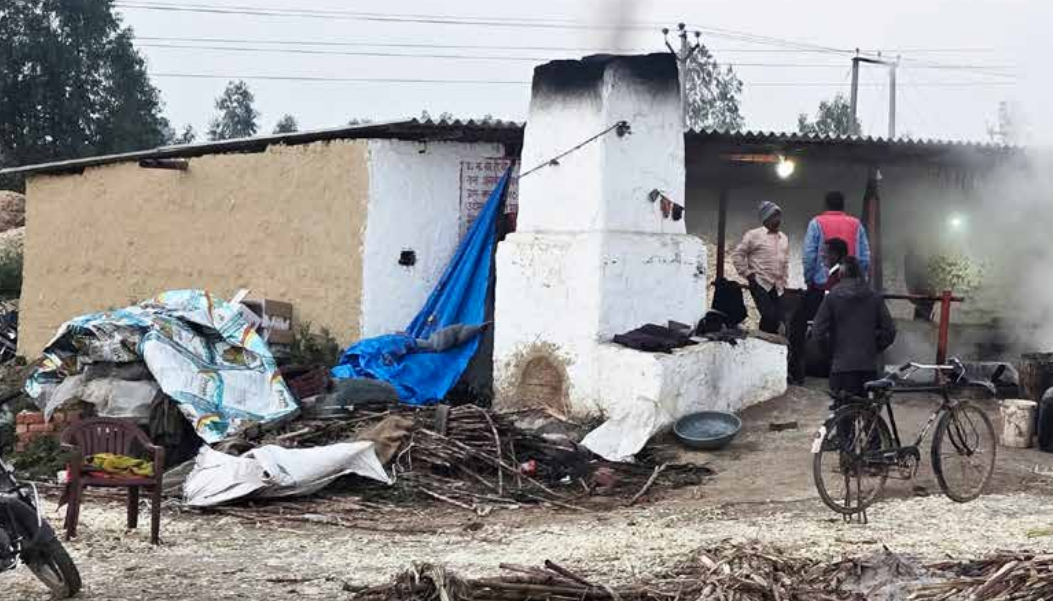
Shifting ground realities in the ongoing crushing season are reshaping Uttar Pradesh’s sugar economy. In the country’s largest sugarcane-producing state, traditional kolhus and jaggery-making units—once considered relics of a fading cottage industry—are mounting a serious challenge to sugar mills. A combination of a weaker cane harvest and firmer jaggery prices has breathed new life into these units, enabling them to offer cane prices that match, and in many cases exceed, those paid by sugar mills.
This season, sugarcane productivity in western Uttar Pradesh has fallen by an estimated 15–20 per cent. As a result, several sugar mills are operating well below capacity. Contrary to industry projections of a sharp rise in sugar output, production is now expected to remain close to last year’s levels. A similar pattern is playing out in neighbouring parts of Uttarakhand, adding to the pressure on mills.
The impact of this shift is visible across the cane belt. Sugar mills that once saw endless queues of trucks and tractor-trolleys laden with cane now stand unusually quiet. “Crushers are paying ₹400 to ₹450 per quintal, and they pay in cash,” says Ronit Chaudhary, a sugarcane farmer from Bijnor district. “That’s why farmers are heading there instead of the mills.”
With better prices and instant payments on offer, the familiar scramble for cane supply slips at sugar mills has all but disappeared. For farmers, the revived crusher industry offers liquidity and choice; for sugar mills, it signals a growing competition that could redefine the balance of power in the cane economy this season.
Crushers offering higher and quicker payouts than sugar mills have triggered an intense price war for sugarcane this season. After two years of stagnation, the Uttar Pradesh government raised the State Advised Price (SAP) by ₹30 to ₹400 per quintal. But the increase has come after farmers endured twin setbacks—disease outbreaks in cane crops and years without meaningful price revisions—pushing many to reconsider sugarcane in favour of alternatives such as agro-forestry.
The strain is now clearly visible at sugar mills. Even at the peak of the crushing season, mills are struggling to secure adequate cane supplies, with closures beginning unusually early, from late January itself. In this backdrop, sugar production in Uttar Pradesh is widely expected to fall this year.
Data from the National Federation of Cooperative Sugar Factories underscores the trend. As of January 31, sugar mills in the state had crushed 55.9 million tonnes of sugarcane, down from 57.9 million tonnes during the same period last year—a shortfall of nearly 2 million tonnes. While sugar recovery has improved from 9.10 per cent to 9.85 per cent, the gains are insufficient to offset the decline in cane availability.
A senior official at a sugar mill in Meerut district told that despite the higher SAP, ensuring steady cane supplies remains a challenge. “There is fierce competition among mills to crush as much as possible,” the official said, attributing the shortage to lower cane production and stiff competition from crushers and rival mills.
For farmers, however, the equation has shifted marginally in their favour. Rising demand for jaggery has enabled crushers to offer prices that outstrip those of sugar mills, often with immediate payment. While jaggery output is rising, sugar production is slipping. Several mills may be forced to wind up operations well before the season’s end. By late January, only 118 mills were operational, compared to 121 last year, and by the end of February, many more are expected to shut down for want of sugarcane.
As competition for sugarcane intensifies, a larger question looms: if unorganised crushers and jaggery units can afford to pay up to ₹450 per quintal for cane, why are sugar mills unable to move beyond ₹400—despite producing not just sugar, but also ethanol, alcohol and other high-value by-products?
Krishna Pal Singh, founder of the modern jaggery unit Hans Heritage Jaggery in Shamli district of Uttar Pradesh, says cane availability has emerged as the biggest challenge this season. “The crop initially looked promising, but yields have clearly fallen,” he told. With limited supply, both sugar mills and jaggery units are being forced to offer better prices to secure cane. What gives jaggery producers an edge, he explains, is the stronger recovery rate and higher market prices of jaggery compared to sugar.
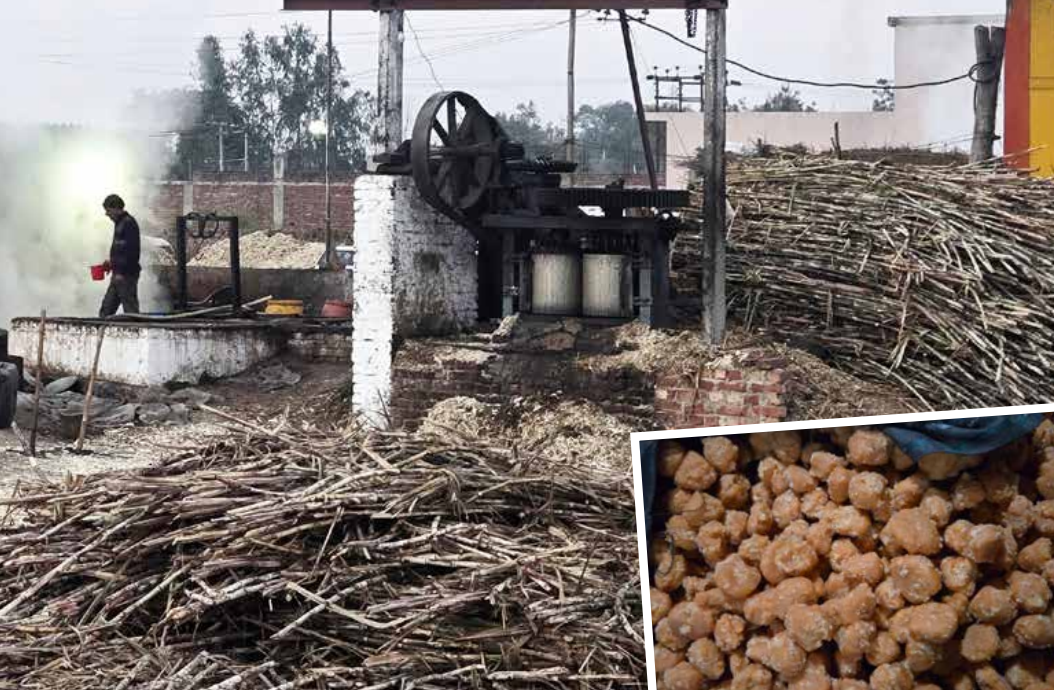
Currently, the ex-factory price of sugar hovers around ₹3,900–4,000 per quintal, while jaggery is trading between ₹4,000 and ₹4,500 per quintal in wholesale markets. Sugar recovery averages about 9.85 per cent, whereas jaggery recovery is significantly higher, ranging from 12 to 14 per cent.
Manjeet Singh, a mill operator from Muzaffarnagar district, points to a steady rise in jaggery demand. “In retail markets, jaggery is selling for as much as ₹60 per kg, while bulk buyers are lifting it directly from mills at ₹45–50,” he says. With consumption rising, many operators are even converting older sugar stocks into jaggery, further lowering production costs and strengthening their ability to pay farmers more for cane.
Policy Squeeze
What was conceived as a five-year push to revive jaggery units and small sugar mills in Uttar Pradesh is now widely seen as a regulatory chokehold. The state government’s Sugar Mill Licensing Policy, notified for the 2021–22 to 2025– 26 crushing seasons, was significantly amended in January 2025—changes that have made the setting up of new units far more difficult.
Under the revised rules, the minimum radial distance for granting new licences to power crushers and sugar mills has been doubled from 7.5 km to 15 km. In effect, no new unit can now be established within a 15- km radius of an existing sugar mill. This provision sharply restricts the availability of viable locations for new units, choking the expansion of jaggery and crusher-based enterprises.
The amendments have also added layers of regulatory complexity for both sugar mills and power crushers. By aligning distance norms for crushers with those applicable to sugar mills—15 km between two mills, as mandated under central policy—the state has effectively placed small, decentralised units on the same regulatory footing as large industrial mills.
Another key change requires all licensed sugar mills and power crushers to make online payments of sugarcane prices directly to farmers. While aimed at improving transparency, this adds compliance costs for smaller units that traditionally operate with limited digital infrastructure.
Compounding these pressures, the Centre last year amended the Sugar Control Order to bring jaggery, khandsari sugar and bura within the definition of “sugar.” Units with a crushing capacity of 500 tonnes per day or more are now also required to pay the Fair and Remunerative Price (FRP) for sugarcane—an obligation earlier reserved for sugar mills.
Together, these provisions significantly raise the regulatory burden on power crushers and jaggery units, weakening their ability to compete with large sugar mills. More importantly, they risk curbing competition in the cane market—potentially undermining farmers’ leverage to secure better prices for their produce.
RNI No: DELBIL/2024/86754 Email: [email protected]